
Electrical problems can be unsettling because they are not always visible. A socket may look normal while smelling hot, a light may flicker for reasons that are harmless or serious, and a tripped circuit can leave you wondering whether to wait or act.
This guide helps you judge when an urgent professional callout is appropriate. It is not a DIY troubleshooting guide. If there is any risk of fire, shock, water contact or unsafe wiring, the safest next step is to stop using the affected area and get qualified help.
What makes an electrical issue an emergency?
An electrical emergency is any situation where the electrical installation, an appliance, or connected wiring may put people or property at immediate risk. The key word is risk. You do not need to see flames or exposed wires for a situation to deserve urgent attention.
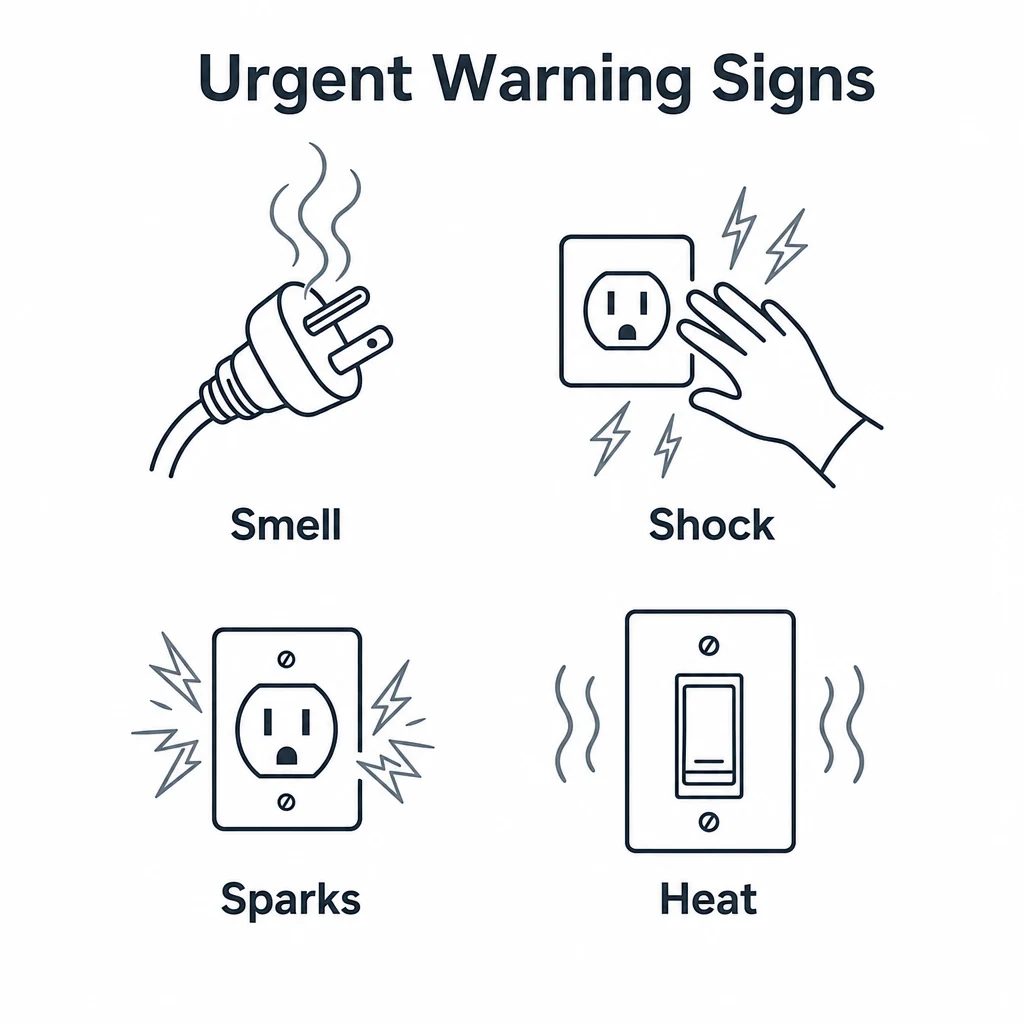
Warning signs include smoke, a burning smell, visible sparks, buzzing from a consumer unit, scorch marks, hot sockets, repeated tripping, electric shocks, or water reaching electrical fittings. A full loss of power can also be urgent, particularly if it affects heating, medical equipment, security, refrigeration, or essential access.
If there is active fire, smoke, a person has received a serious electric shock, or you believe someone is in immediate danger, call the emergency services first. If the danger is electrical but not an emergency-services incident, a qualified electrician or urgent electrical callout is usually the right route.
Clear signs you should arrange urgent help
Some symptoms should be treated as urgent because they can point to overheating, arcing, damaged insulation or a failing connection. These faults can worsen quickly, especially when appliances are still being used.
- Burning, fishy or plastic-like smells near sockets, switches, lights, appliances or the consumer unit.
- Smoke, scorch marks or discolouration around outlets, plugs, switches, light fittings or the fuse board.
- Sparks that are more than a brief tiny flash when plugging something in, or sparks that occur repeatedly.
- Crackling, buzzing or sizzling sounds from fixed wiring, fittings or the consumer unit.
- Sockets, plugs or switches that feel hot, especially if the heat is localised or increasing.
- Repeated tripping after a circuit is reset, particularly when there is no obvious appliance causing it.
- Lights dimming or flickering across several rooms, which may suggest a wider fault rather than a single bulb issue.
In these situations, avoid using the affected socket, switch, light or appliance. If it is safe to do so, keep people away from the area and wait for professional advice.
Water and electricity need fast attention
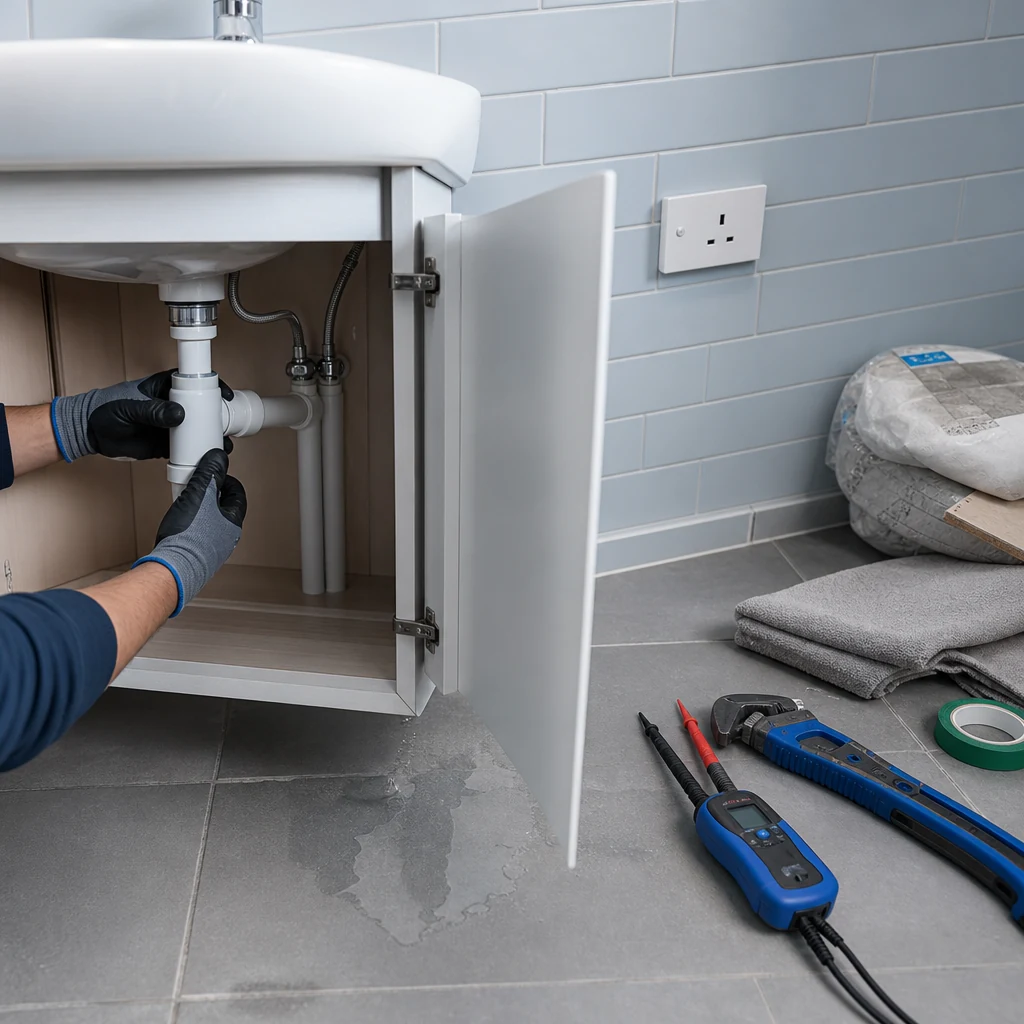
Water changes the level of risk immediately. A leak through a ceiling, a flooded utility area, water around a boiler or cylinder, or moisture entering a bathroom fitting can make electrical parts unsafe even after the visible water has been cleared.
Bathrooms, kitchens, utility rooms and plant cupboards deserve particular caution because they combine water, metal pipework, appliances and fixed electrical equipment. If water has reached a light, extractor fan, shower, socket, isolator, appliance connection, underfloor heating control or consumer unit, treat it as urgent.
Do not touch wet switches, plugs, appliances or fittings. Do not assume something is safe because it still works. Moisture can remain inside accessories and create a shock or fire risk later. If the issue is part of wider bathroom work, it may also be worth reviewing the condition of the room as a whole with experienced bathroom renovation specialists, especially where plumbing and electrics are close together.
When a power cut is not the same as an electrical emergency
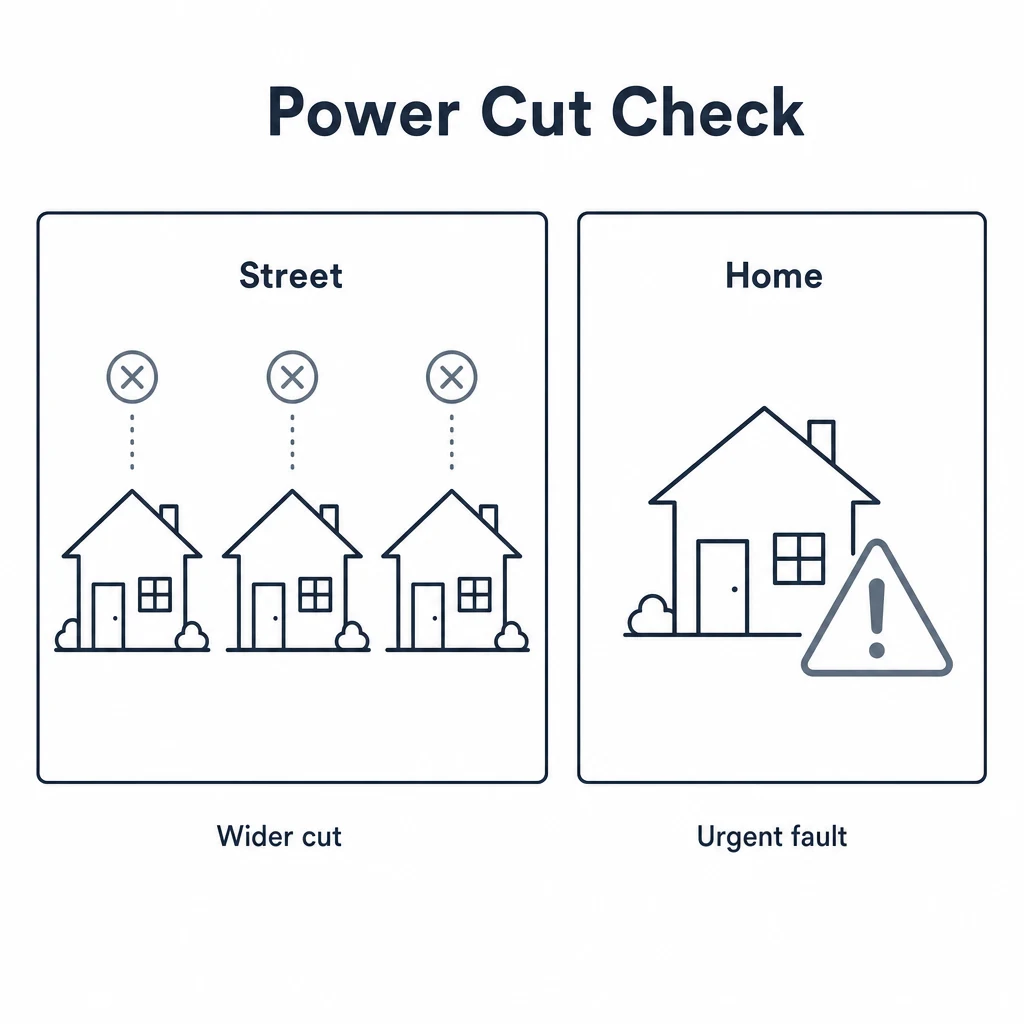
A power cut can feel like an emergency, but the cause matters. If nearby homes are also without electricity, it may be a network issue rather than a fault inside your property. In many parts of the UK, 105 is the free number used to report or check a power cut.
However, a loss of power can still need an electrician if it only affects your home, part of your home, or specific circuits. It is more urgent if the consumer unit will not reset, if there are smells or sounds from the board, if power goes off when a particular circuit is used, or if the outage affects essential equipment.
A single tripped circuit is not always an emergency, but repeated tripping should not be ignored. The protective device is doing its job by cutting power when it detects a problem. Forcing it back on again and again can mask a fault and increase risk. The safer approach is to stop using the affected circuit or appliance and arrange a professional check.
Smart controls, renovations and hidden electrical risks
Modern homes often include smart lighting, app-controlled heating, automated blinds, smart showers, connected security and charging points for everyday devices. These systems can be convenient, but they still rely on safe wiring, correct installation and suitable protection.
An urgent callout may be appropriate if smart controls behave unpredictably alongside signs of electrical trouble. Examples include lights turning on and off with buzzing, a smart thermostat losing power repeatedly, a connected shower isolator feeling warm, or a control panel becoming unresponsive after a leak.
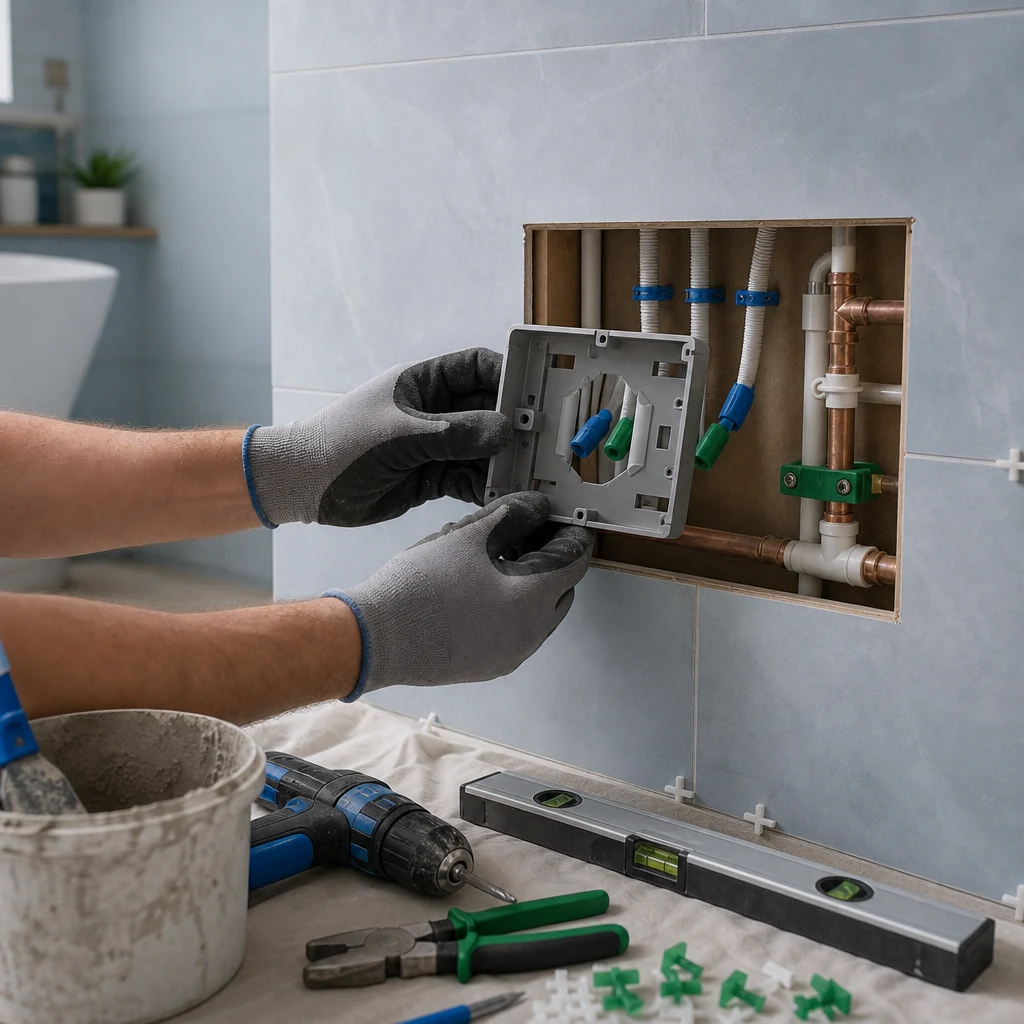
Renovation work can also expose hidden issues. Old cable routes, overloaded extensions, damaged accessories, poorly protected bathroom circuits and temporary wiring can all create risk if they are disturbed or used beyond their intended purpose. If you are planning upgrades, a joined-up approach to electrical safety, plumbing and controls helps prevent urgent problems later. For connected living spaces, professionally designed smart home automation should always sit on top of a safe electrical foundation.
What to do while waiting for a professional
The right action depends on the situation, but the principle is simple: reduce risk without putting yourself in danger. Keep people away from the affected area, stop using suspect appliances or fittings, and avoid touching anything wet, damaged, hot, sparking or making unusual noises.
If there is fire or smoke, leave the property and call the emergency services. If someone is receiving an electric shock, do not touch them while they may still be in contact with the electrical source. If it is safe and you know how, isolate the power before helping, then seek urgent medical advice.
For non-fire electrical emergencies, gather useful information for the electrician: what happened, when it started, which rooms or circuits are affected, whether water is involved, and whether there are smells, sounds or visible marks. Clear details can help the professional prioritise the risk quickly without turning the situation into a DIY investigation.
After the immediate issue is made safe, it is worth thinking about prevention. If the problem happened during or after a refurbishment, use a proper bathroom renovation planning guide to make sure electrics, ventilation, plumbing and finishes are considered together from the start.
- Treat burning smells, smoke, scorch marks, buzzing, repeated tripping and shocks as urgent warning signs.
- Call emergency services first if there is fire, smoke, serious injury or immediate danger.
- Water near sockets, lights, showers, controls or the consumer unit needs professional attention.
- A wider power cut may be a network issue, but power loss isolated to your home can still need an electrician.
- Do not keep resetting a circuit that repeatedly trips; stop using it and arrange a qualified inspection.
Frequently asked questions
Is a tripping fuse box an electrical emergency?
It can be. A one-off trip may happen when a faulty appliance or overloaded circuit is detected, but repeated tripping, buzzing, burning smells or a circuit that will not reset should be treated as urgent. Do not keep forcing it back on.
Should I call an electrician if I smell burning but cannot see smoke?
Yes. A burning, hot plastic or fishy smell near electrical fittings can point to overheating or damaged components. Stop using the affected area and arrange urgent professional help, even if everything still appears to work.
Is water through a ceiling light an emergency?
Yes, treat it as urgent. Do not touch the light switch or fitting, keep away from the area, and get professional advice. Water can remain inside electrical parts and create a shock or fire risk after the leak seems to have stopped.
When should I call emergency services instead of an electrician?
Call emergency services first if there is fire, smoke, a serious electric shock, danger to life, or you cannot safely stay in the property. Once the immediate danger is controlled, an electrician can assess and repair the electrical fault.
Need urgent electrical help?
If something at home feels unsafe, DWG Contractors can help make the situation clear, calm and professionally managed.